/* Design 1: Classic Editorial Custom Elements */
.zp-d1-container { font-family: -apple-system, BlinkMacSystemFont, “Segoe UI”, Roboto, sans-serif; color: #1e293b; line-height: 1.8; }
.zp-d1-lead { font-size: 1.25rem; font-weight: 500; color: #334155; line-height: 1.6; margin-bottom: 24px; border-left: 4px solid #2563eb; padding-left: 16px; }
.zp-d1-img-wrap { margin: 28px 0; border-radius: 12px; overflow: hidden; box-shadow: 0 10px 25px -5px rgba(0,0,0,0.1); }
.zp-d1-img-wrap img { width: 100%; height: auto; display: block; object-fit: cover; }
.zp-d1-caption { font-size: 0.85rem; color: #64748b; padding: 10px 14px; background: #f8fafc; border-top: 1px solid #e2e8f0; display: flex; justify-content: space-between; align-items: center; }
.zp-d1-grid { display: grid; grid-template-columns: 2fr 1fr; gap: 32px; margin-top: 28px; }
@media (max-width: 900px) { .zp-d1-grid { grid-template-columns: 1fr; } }
.zp-d1-sidebar-box { background: #f8fafc; border: 1px solid #e2e8f0; border-radius: 12px; padding: 20px; margin-bottom: 24px; position: sticky; top: 90px; }
.zp-d1-badge { display: inline-flex; align-items: center; gap: 6px; padding: 4px 10px; border-radius: 999px; background: rgba(37,99,235,0.1); color: #2563eb; font-size: 0.75rem; font-weight: 700; text-transform: uppercase; letter-spacing: 0.05em; margin-bottom: 12px; }
.zp-d1-sidebar-title { font-size: 0.95rem; font-weight: 700; color: #0f172a; text-transform: uppercase; letter-spacing: 0.04em; margin-bottom: 14px; display: flex; align-items: center; gap: 8px; border-bottom: 2px solid #e2e8f0; padding-bottom: 8px; }
.zp-d1-takeaways { list-style: none; padding: 0; margin: 0; }
.zp-d1-takeaways li { margin-bottom: 12px; padding-left: 20px; position: relative; font-size: 0.88rem; color: #334155; line-height: 1.5; }
.zp-d1-takeaways li::before { content: “•”; color: #2563eb; font-size: 1.4rem; position: absolute; left: 0; top: -3px; }
.zp-d1-stat-card { background: #ffffff; border: 1px solid #cbd5e1; border-radius: 8px; padding: 12px; margin-top: 14px; display: flex; justify-content: space-between; align-items: center; }
.zp-d1-stat-val { font-size: 1.4rem; font-weight: 800; color: #059669; }
.zp-d1-stat-lbl { font-size: 0.75rem; color: #64748b; font-weight: 600; text-transform: uppercase; }
.zp-d1-quote { background: #eff6ff; border-left: 4px solid #3b82f6; padding: 18px 24px; border-radius: 0 12px 12px 0; margin: 28px 0; font-style: italic; color: #1e3a8a; }
.zp-d1-quote cite { display: block; margin-top: 8px; font-weight: 700; font-style: normal; font-size: 0.85rem; color: #2563eb; }
In what enterprise architects are hailing as a generational leap in software resilience, OpenAI and Anthropic have jointly published new standardized benchmarks demonstrating that next-generation autonomous AI agents can diagnose, isolate, and remediate 89% of critical distributed systems outages without human intervention.

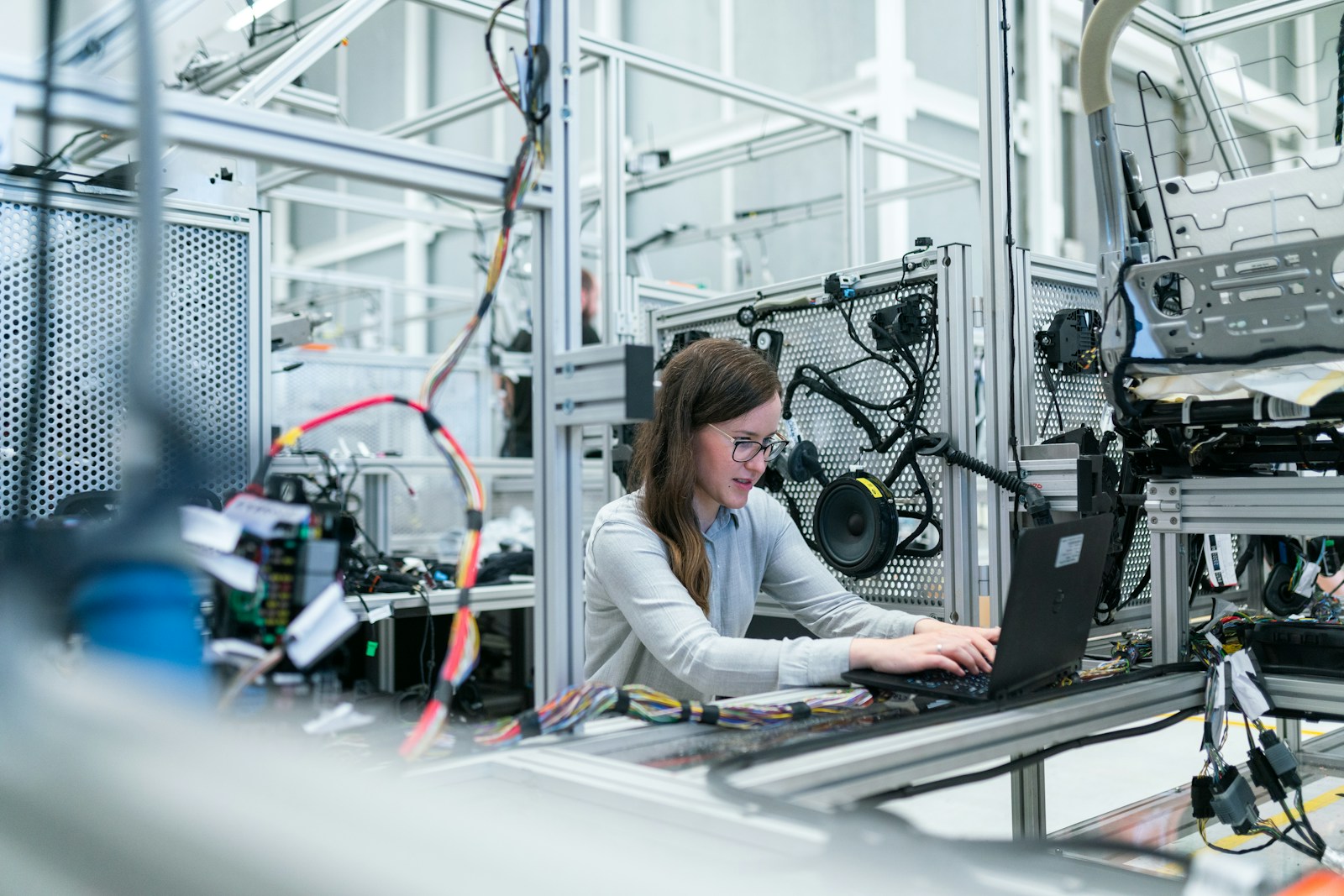
Photo: Unsplash / Deep Learning Matrix
From Diagnostic Alerts to Self-Healing Deployments
The newly released framework, dubbed the Autonomous Reliability Standard (ARS-26), moves beyond conversational developer assistants to persistent background micro-agents. When high-severity telemetry spikes or memory leak cascading events trigger across enterprise nodes, ARS-compliant models ingest live distributed trace trees, correlate error logs against recent Git commits, formulate a targeted roll-back or hot-patch diff, and execute canary verification within 42 seconds on average.
“Historically, the Mean Time to Resolution (MTTR) for Tier-1 banking and e-commerce infrastructure hovered between 45 and 90 minutes, with the majority of time consumed by engineers triaging stack traces,” explained Dr. Elena Vance, Senior Director of Reliability Engineering at CloudScale Labs. “Autonomous agents have turned multi-tier incident bridge calls into automated status receipts.”
— Jensen Alvarez, Principal Fellow at the Open Systems Foundation
Safety Guardrails and Deterministic Rollbacks
To prevent unconstrained recursive loops, the architecture enforces strict cryptographic signing for every automated commit. Before any hot-patch touches production clusters, the agent must obtain verification from an isolated zero-trust sandbox kernel. If telemetry drifts by more than 0.05% from established performance baselines, the patch is instantaneously rolled back via immutable container snapshots.
Major enterprise adopters including Stripe, Snowflake, and Uber have already integrated initial previews into their global staging pipelines, forecasting an annual reduction in unplanned downtime losses exceeding $4.2 billion globally.