






Bluesky, the decentralized social platform that once rode a wave of post-election defections from X, is now facing a different reality: its mobile app’s audience is contracting, even as the company pivots toward a broader vision beyond the app itself.
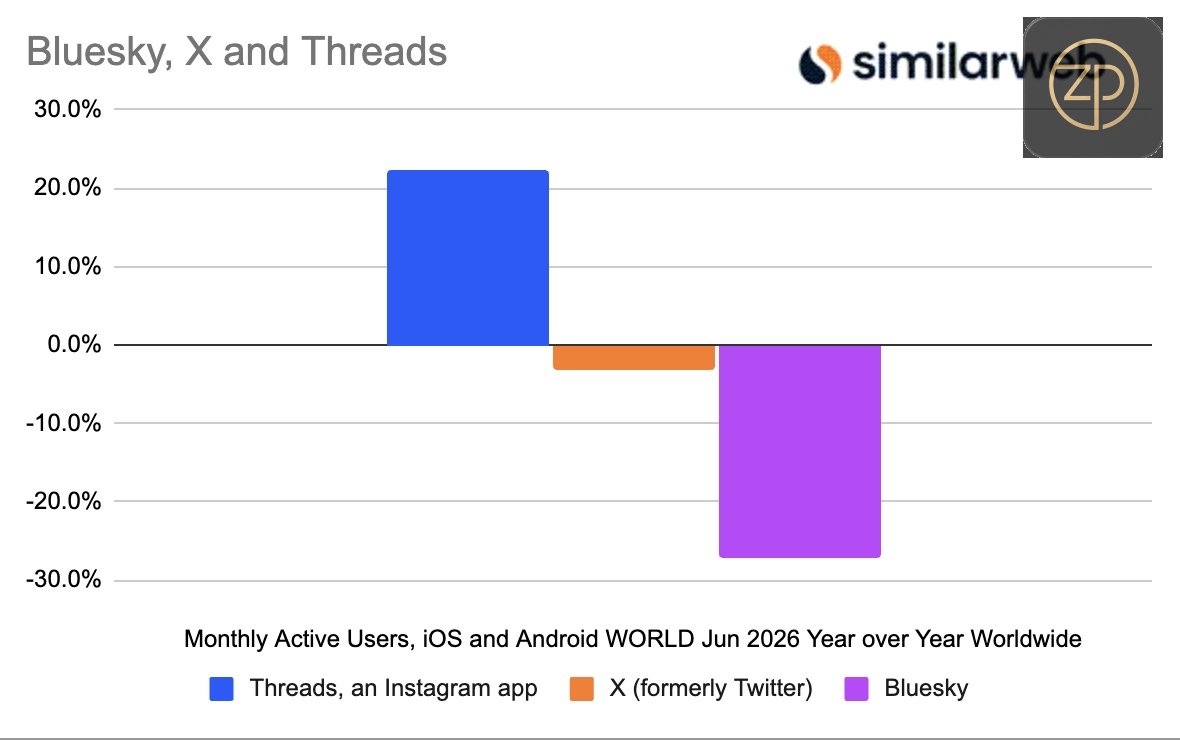
Fresh data from digital intelligence firm Similarweb shows that Bluesky’s mobile app drew roughly 10.4 million monthly active users worldwide in June 2026, a drop of 27.2% compared to the same month a year earlier. The slide continued on a daily basis, with daily active users falling 25.6% year-over-year in July to about 3 million.
Those numbers point to a widening gap between registered accounts and regular mobile engagement. While Bluesky has added users in terms of total sign-ups, a significant portion of those who flocked to the service in late 2024 have not remained active on the app.
The decline is even starker when measured against the platform’s peak. Similarweb’s estimates put Bluesky’s quarterly average monthly active users at around 22.1 million in the fourth quarter of 2024. By the second quarter of 2026, that figure had tumbled to 10.7 million, a drop of roughly 52%.
Despite the shrinking base, those who have stayed are showing strong loyalty. The app’s stickiness ratio—daily active users divided by monthly active users—stood at approximately 29% in June, a level comparable to Meta’s Threads.
For Bluesky’s new chief executive, Toni Schneider, the metrics may not be a cause for alarm. The company’s strategy has evolved to prioritize the growth of its underlying protocol, AT Protocol, over the success of any single app. That shift is already bearing fruit, as third-party projects like BlackSky and Eurosky gain traction, and video-focused AT Proto app Skylight is finding early adopters.
Bluesky has also expanded its product lineup with new offerings, including Attie, an AI-powered research tool. In addition, the company is developing support for private data on the platform, a move that could attract users more interested in closed networks and smaller communities rather than the public feed.
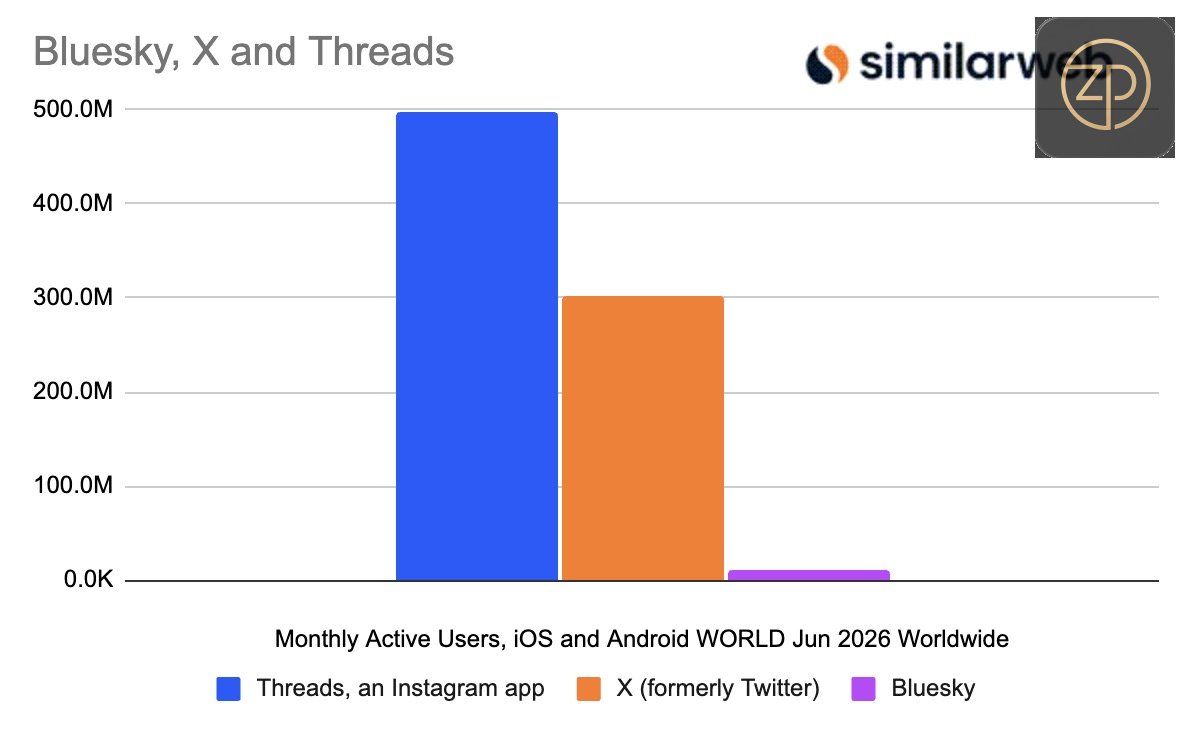
Interestingly, the data does not suggest that Bluesky’s losses are translating into gains for X. Similarweb’s figures show X’s worldwide mobile monthly active users were down about 3% year-over-year in June, and its daily active users dipped 7% in July to 123.7 million. X still commands a massive audience, with roughly 302 million monthly active users on its app as of June 2026, and its web traffic has grown 5.3% year-over-year to 4.7 billion visits in July.
The more likely beneficiary of Bluesky’s slide could be Threads. The Meta-owned platform saw its daily active users jump 21.3% year-over-year to 147 million in July 2026, and its website visits surged 112% to 471.6 million. Whether Threads is pulling disaffected Bluesky users or attracting an entirely new demographic remains unclear.
Bluesky’s own public statistics show nearly 46 million registered accounts, but the company does not disclose detailed figures on daily or monthly active usage.
The narrative around Bluesky has shifted from being a direct rival to X to becoming a foundation for a broader ecosystem. The company’s leadership appears willing to accept a smaller, more engaged user base on its flagship app if it means the protocol can power a variety of niche social experiences.
That approach carries risks. A shrinking app could reduce the platform’s cultural relevance, making it harder to attract new users or retain developers. Yet, the steady stickiness rate suggests that the core community remains deeply invested, which could be more valuable in the long run than chasing fleeting spikes in popularity.
As Bluesky diversifies its focus, the coming months will reveal whether its bet on protocol-level growth pays off or whether the decline in app usage signals a broader erosion of interest in decentralized social networking.
