





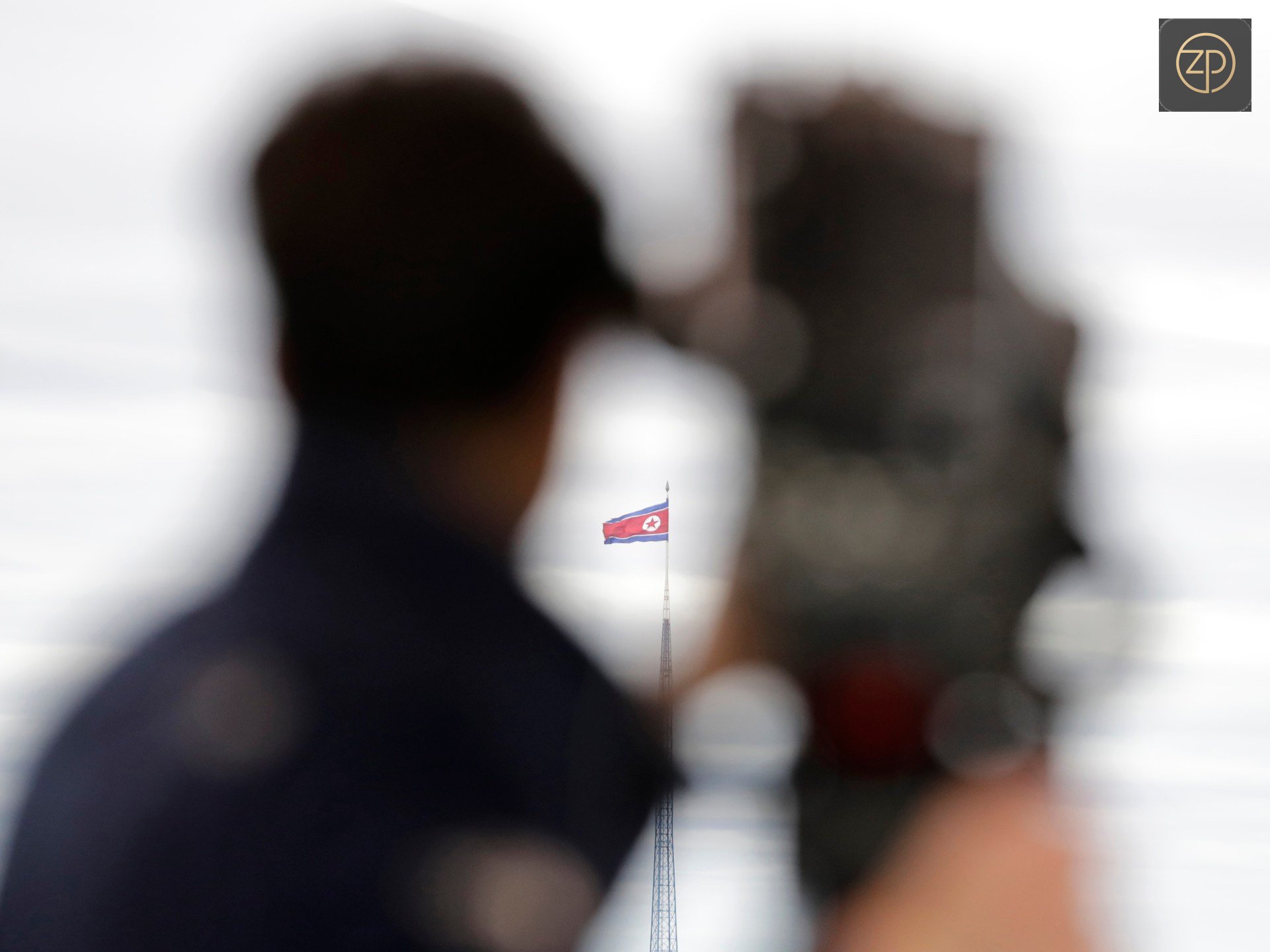

- North Korea launched a ballistic missile toward the Sea of Japan on Wednesday, its second test in under a week, as South Korea and the US prepared for annual military drills.
- The missile flew over 700 kilometers, with South Korean and Japanese forces confirming the launch and monitoring its trajectory.
- Analysts see the test as a deliberate message ahead of the Ulchi Freedom Shield exercise, amid broader tensions with Japan and Russia's use of North Korean weapons in Ukraine.
North Korea launched a ballistic missile into the waters off its east coast on Wednesday, a move that security analysts say is a pointed signal to Washington and Seoul just days before their joint military exercise gets underway. The launch, detected by South Korean and Japanese forces shortly after 6 a.m. local time, is Pyongyang’s second weapons test in under a week.
According to South Korea’s Joint Chiefs of Staff, the projectile was fired from the Wonsan area on the country’s eastern seaboard and traveled more than 700 kilometers (435 miles) before splashing down in the Sea of Japan, which Seoul refers to as the East Sea. The military said it had tightened its surveillance posture and was coordinating closely with American and Japanese counterparts in the wake of the launch.
Japan’s Defense Ministry confirmed via social media that the suspected ballistic missile had already fallen, though it offered no additional specifics. The flight path and distance suggest a medium-range weapon, though officials have not yet publicly identified the exact type.
The test comes as South Korea and the United States finalize preparations for their annual Ulchi Freedom Shield exercise, set to begin Monday and run for 11 days. Around 18,000 South Korean troops are slated to participate, a scale similar to previous iterations of the drill. The exercise has long been a flashpoint, with Pyongyang routinely condemning it as a rehearsal for an invasion.
Lim Eul-chul, a North Korea expert at Kyungnam University, framed Wednesday’s launch as a deliberate political message. “North Korea has never simply let a South Korea-US joint military exercise pass without a response,” he told the AFP news agency. “This is a message that Pyongyang is closely watching the upcoming drills and could stage a provocation if it deems one necessary.”
Seoul and Washington have consistently maintained that the exercises are defensive in nature, a position they reiterated in recent statements. Still, the timing of the missile test—less than a week after Pyongyang’s last launch on August 6, which was detected by South Korea, the US, and Japan—underscores the volatile dynamic on the peninsula.
The latest provocation also arrives amid heightened rhetoric between North Korea and Japan. Pyongyang has issued at least seven statements critical of Tokyo’s defense posture since July, and on Tuesday, state media lambasted Japan’s latest defense white paper as a “re-invasion-minded” document that “groundlessly described” North Korea as a major strategic challenge to justify an arms buildup.
Beyond the immediate region, North Korea’s expanding military cooperation with Russia has drawn international concern. Ukrainian President Volodymyr Zelenskyy said on Tuesday that a North Korean ballistic missile was used in a Russian attack that killed seven workers at a steel plant in the southeastern city of Zaporizhzhia. The claim, if confirmed, would mark a further escalation in Pyongyang’s involvement in the Ukraine conflict.
The flurry of missile activity suggests North Korea is intent on maintaining leverage as the region’s security landscape shifts. With the Ulchi Freedom Shield drills about to begin, the Kim regime appears to be signaling that it will not tolerate what it views as provocative military posturing by its adversaries.
Analysts note that Pyongyang’s tests often serve a dual purpose: they are both a show of force and a diplomatic tool. By firing a missile just days before the joint exercise, North Korea is reminding all parties that it retains the capacity to disrupt any military plans—and that it expects to be a central player in any future security dialogue.
For now, the immediate focus remains on the upcoming drills and whether Pyongyang will escalate further. Past patterns suggest that additional launches or rhetoric could follow, keeping the region on edge. As one observer put it, the cycle of provocation and response shows no signs of breaking.
