







A senior Pentagon official has called on Asian allies to increase their defense investments, framing the request as a shared responsibility rather than a sign of American withdrawal. Speaking at a security forum in Manila on Monday, Elbridge Colby, undersecretary of defense for policy, insisted the United States remains deeply committed to the region.
“America is definitely not disengaging from Asia — to the contrary. Our vital national interests dictate our enduring presence here,” Colby told an audience of diplomats, military officers, and business leaders. “We are not leaving; in fact, we are digging in, to ensure a favorable balance of power where it matters most.”
The trip marks Colby’s first stop in Southeast Asia, with visits planned to Indonesia, Thailand, and Cambodia. His remarks come as the U.S. balances its attention between the Middle East and the Indo-Pacific, a region Washington has long called a priority.
Colby avoided the sharp criticism of China that has marked some previous U.S. statements. Instead, he stressed the need for a collective defense posture. “This defense architecture cannot rest on American shoulders alone,” he said. “It must be upheld by a network of highly capable, sovereign nations that have modernized their own forces and stepped up to secure their own territory.”

He added: “When we ask our allies and partners to step up, to invest more in their own defense and to take responsibility for their own sovereign security, we are not signaling abandonment. We are looking for partners, not protectorates.”
The comments echo a broader push by the Pentagon to encourage burden-sharing among allies, particularly in Asia where China’s military assertiveness has raised concerns.
Colby praised the Philippines for its efforts to strengthen its military, noting the annual large-scale combat exercises held with U.S. forces. He also cited similar progress in Thailand, Indonesia, and other Southeast Asian nations.
The Philippines is a key U.S. treaty ally, and Washington has repeatedly vowed to defend it if Filipino forces, ships, or aircraft come under armed attack, including in the disputed South China Sea. That pledge has taken on greater urgency in recent years as Beijing’s coast guard and navy have clashed with Philippine vessels near contested features.
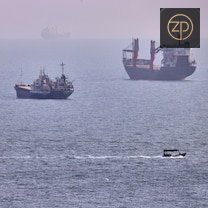
China claims nearly the entire South China Sea, a vital waterway for global trade. The Philippines, Vietnam, Malaysia, Brunei, and Taiwan all have overlapping claims. A 2016 international arbitration ruling, initiated by the Philippines, invalidated China’s expansive claims, but Beijing has rejected the decision.
Colby reiterated a vow made by U.S. Defense Secretary Pete Hegseth at the Shangri-La dialogue in Singapore in May. Hegseth had promised to build a strong defense in the Western Pacific “that ensures aggression is infeasible, escalation unattractive and war deemed irrational.”
Colby said the U.S. is committed to sustaining “combat-credible power where it matters most.” But he made clear that the burden cannot fall on Washington alone. “It must be upheld by a network of highly capable, sovereign nations that have modernized their own forces and stepped up to secure their own territory,” he said.
Analysts say the message is aimed at reassuring allies while nudging them to spend more on defense. Many Asian nations still rely heavily on U.S. security guarantees, and Washington has long pushed for greater self-reliance.

The visit also signals that the U.S. intends to maintain its presence in Asia despite ongoing conflicts elsewhere. Colby’s itinerary includes stops in countries with varying ties to China, reflecting Washington’s effort to shore up partnerships across the region.
Local observers note that the Philippines, which hosts U.S. troops under a visiting forces agreement, has been increasingly assertive in pushing back against Chinese actions. The two countries have held joint patrols and exercises, and Manila has sought to diversify its defense partnerships.
Colby’s remarks are likely to be watched closely in Beijing, which has accused Washington of stoking tensions in the region. But the Pentagon official framed the U.S. posture as defensive, aimed at preserving stability and deterring aggression.
“We see Asia as of paramount importance,” he said. The coming days will show whether his message resonates with other Southeast Asian nations, many of which prefer to balance their ties between China and the United States.
