





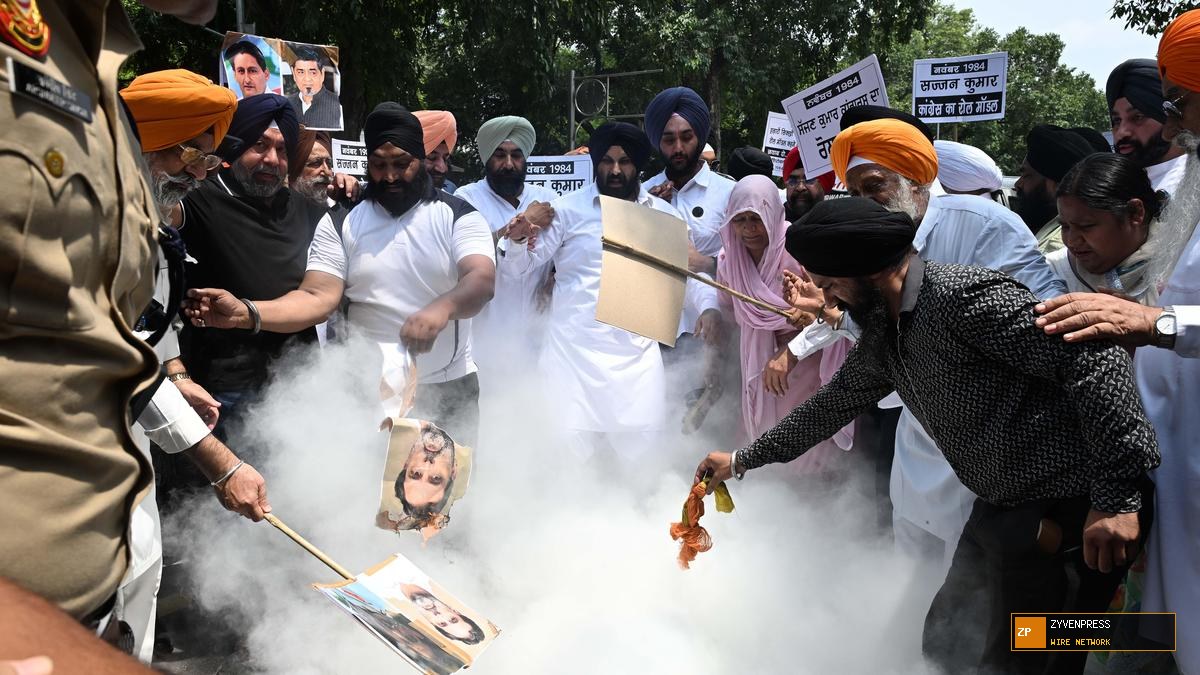

On the afternoon of August 22, 2026, a surge of anger erupted outside the Delhi residence of Congress stalwart Rahul Gandhi. More than 200 Sikh community leaders, many of whom were relatives of the 1984 anti‑Sikh riot victims, converged on the area to burn an effigy of the politician and strike it repeatedly with slippers. The demonstration was a direct response to remarks by Lok Sabha MP Deepender Singh Hooda, who had described former congressman Sajjan Kumar—a convicted participant in the 1984 violence—as a “party role model.”
Background
The 1984 riots left thousands of Sikhs dead across Delhi and left a scar that has persisted for decades. Sajjan Kumar, who had spent nearly eight years in Tihar jail following his conviction, was sentenced to life imprisonment in 2018 after the Delhi High Court overturned an earlier acquittal. He passed away on Wednesday, August 20, after a bout of health complications, a death that reignited the unresolved tensions surrounding the riots.
The Protest
At roughly 2 p.m., a group of Sikh representatives assembled outside the gates of Gandhi’s house. The crowd, organized in an unauthorized capacity, set a papier‑mâché effigy on fire and then pounded it with slippers—an act that drew sharp rebuke from the police. The Delhi police had already erected barricades and issued warnings that the demonstration was illegal. When several protesters crossed the barriers, five or six of them—including Harmeet Singh Kalka, president of the Delhi Sikh Gurudwara Management Committee—were taken into custody at Mandi Marg police station. They were released later after the police clarified that no charges had been filed.
“The Congress party’s real face has come out now. A man who was behind bars for eight years and was given a life sentence, for whose death sentence there had been demands, is now being called a role model by the party’s leadership. This is deeply hurtful to the victims’ families. We decided to protest and demand an apology from Rahul Gandhi and his resignation over these remarks,” explained Harmeet Singh Kalka to The Hindu.
Deputy Commissioner of Police Sachin Sharma confirmed that the protest was indeed unauthorized. “The protesters were warned, but they continued to cross the barricades. Five to six people leading the protest were detained and taken to Mandi Marg police station. A case is being registered against them,” he said. The police also noted that the demonstration had been organized without the requisite permissions and that the crowd’s actions could be deemed unlawful.
Reactions
Rahul Gandhi has yet to issue a formal response to the protest. However, the Congress party’s leadership has been forced to confront the fallout from the incident, as the party’s image is now being questioned by a community that has long felt marginalized. The call for an apology and the demand for MP Hooda’s resignation highlight how political statements can have far-reaching consequences, especially when they touch upon sensitive historical events.
Historical Context
Since 1984, the families of the riot victims have campaigned tirelessly for accountability. While several perpetrators have been convicted, many families argue that justice is still incomplete. The death of Sajjan Kumar, a figure who had been a symbol of the riots’ brutality, has reopened old wounds. The incident underscores how the political narrative surrounding historical injustices can be weaponized, either to rally support or to provoke dissent.
Looking Ahead
For the Sikh community, the protest is a statement of resilience and a reminder that the quest for justice remains unfulfilled. For the Congress, it is a warning that rhetoric must be handled with care, particularly when it involves contentious historical figures. The incident also signals that political parties may face renewed scrutiny over their handling of past crimes, especially as the country continues to grapple with its complex legacy.
In the weeks to come, observers will watch closely to see whether Rahul Gandhi issues an apology or whether the party takes further steps to address the concerns of the Sikh community. The broader political landscape may also shift, as parties reassess how they navigate historical controversies to maintain public trust.
The protest highlights how unresolved historical injustices can erupt into contemporary political conflict, forcing parties to address past wrongs. It also signals that political rhetoric, even if unintended, can reignite deep-seated grievances and threaten social cohesion.
Frequently Asked Questions
SCHEMA INDEXED
Who was Sajjan Kumar?+
Sajjan Kumar was a former Congress MP convicted for his role in the 1984 anti‑Sikh riots, receiving a life sentence after a Delhi High Court overturned his earlier acquittal.
Why did the protest target Rahul Gandhi?+
Rahul Gandhi’s residence was chosen because a congress MP, Deepender Singh Hooda, had praised Sajjan Kumar as a ‘party role model’, a statement that offended Sikh families seeking justice.
{“@context”:”https://schema.org”,”@type”:”FAQPage”,”mainEntity”:[{“@type”:”Question”,”name”:”Who was Sajjan Kumar?”,”acceptedAnswer”:{“@type”:”Answer”,”text”:”Sajjan Kumar was a former Congress MP convicted for his role in the 1984 anti‑Sikh riots, receiving a life sentence after a Delhi High Court overturned his earlier acquittal.”}},{“@type”:”Question”,”name”:”Why did the protest target Rahul Gandhi?”,”acceptedAnswer”:{“@type”:”Answer”,”text”:”Rahul Gandhi’s residence was chosen because a congress MP, Deepender Singh Hooda, had praised Sajjan Kumar as a ‘party role model’, a statement that offended Sikh families seeking justice.”}}]}
