







Accommodation rates across prime viewing spots in Europe have doubled as hundreds of thousands of travelers arrive to watch the continent’s first total solar eclipse this century. The influx of visitors has sent room prices soaring in Iceland and Spain, prompting public safety officials to launch large-scale security operations ahead of the celestial event on Wednesday.
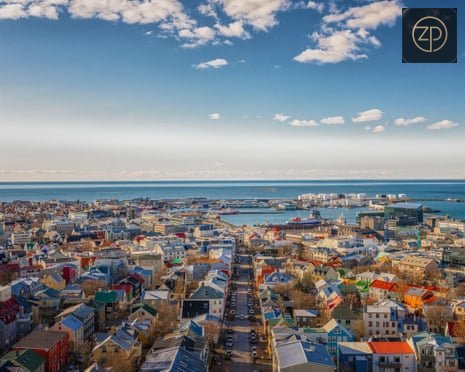
In Reykjavík, where the sky will darken before evening, average hotel rates for August 12 reached $793, according to hospitality market tracker Lighthouse Intelligence. The price marks a 98 percent surge compared to the same date last year, reflecting intense demand for one of the few urban vantage points along the path of totality.
Spain is bracing for an extraordinary wave of astro-tourism. The country’s finance ministry reported on Monday that 460,000 international visitors are traveling to the nation specifically to witness the eclipse. The surge in demand has triggered steep price hikes across northern regions and coastal destinations.
Data shows that room rates in A Coruña jumped 135 percent over last year’s figures to an average of $451. In Bilbao, prices rose 67 percent, while Santiago de Compostela logged a 34 percent increase. On the island of Mallorca, where the sun will set as an eclipsed disk over the horizon, nightly rates rose 24 percent to roughly $448.

Beyond major city centers, guesthouses and rural accommodations along the track of totality sold out months ago. Enthusiasts have converted private fields into temporary viewing sites, while American travelers arranged home swaps with residents in Castilla y León, one of the premier viewing regions in the country.
The sudden migration of tourists has raised alarms among emergency services in Spain, where heatwaves have left rural terrain extremely dry. Traffic authorities expect 1.5 million more vehicle journeys on Wednesday than normal. Officials fear jammed roads could block emergency crews if fires ignite in remote countryside areas.
In response, Spanish authorities are deploying 35,000 police officers to enforce safety mandates and maintain order. Regional governments have introduced strict measures, banning fireworks, open-fire barbecues, and roadside parking near dry vegetation. In the Valencia region, officials shut down natural parks and prohibited hiking on rural trails.
Safety concerns follow an already destructive summer. Wildfires have scorched roughly 200,000 hectares of land in Spain this year, six times higher than the area burned by this point in 2025, according to the environment ministry. As of Monday evening, firefighters were actively battling three major blazes in the provinces of Huelva, Segovia, and Huesca.
“We’ve had an extremely tough summer in Spain, with yet another series of major forest fires,” said Virginia Barcones, the interior ministry’s secretary-general for civil protection and emergencies. “That’s why we must restrict any kind of activity that could generate a spark.”
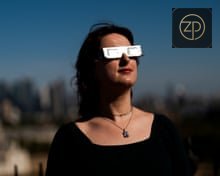
For celestial observers unable to travel to the path of totality, space agencies have established remote viewing infrastructure. NASA installed four high-resolution telescopes in the northwestern village of Villalibado, aiming to stream live video coverage of the event to an estimated audience exceeding 10 million viewers online.
Residents outside the path of totality will still catch part of the show. In the United Kingdom, observers will see a partial eclipse on Wednesday evening, with peak coverage expected at 7:12 p.m. in London.
