





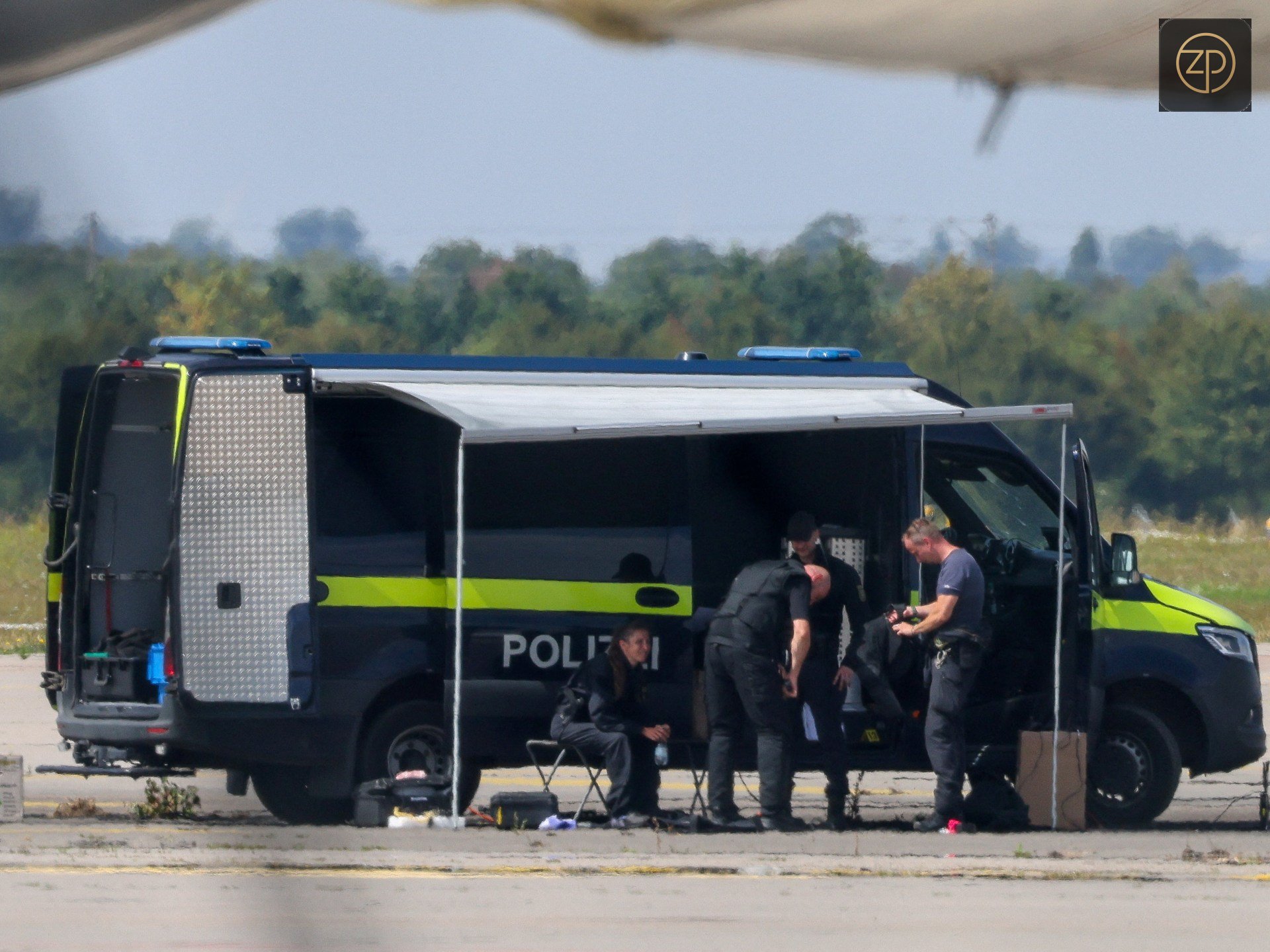

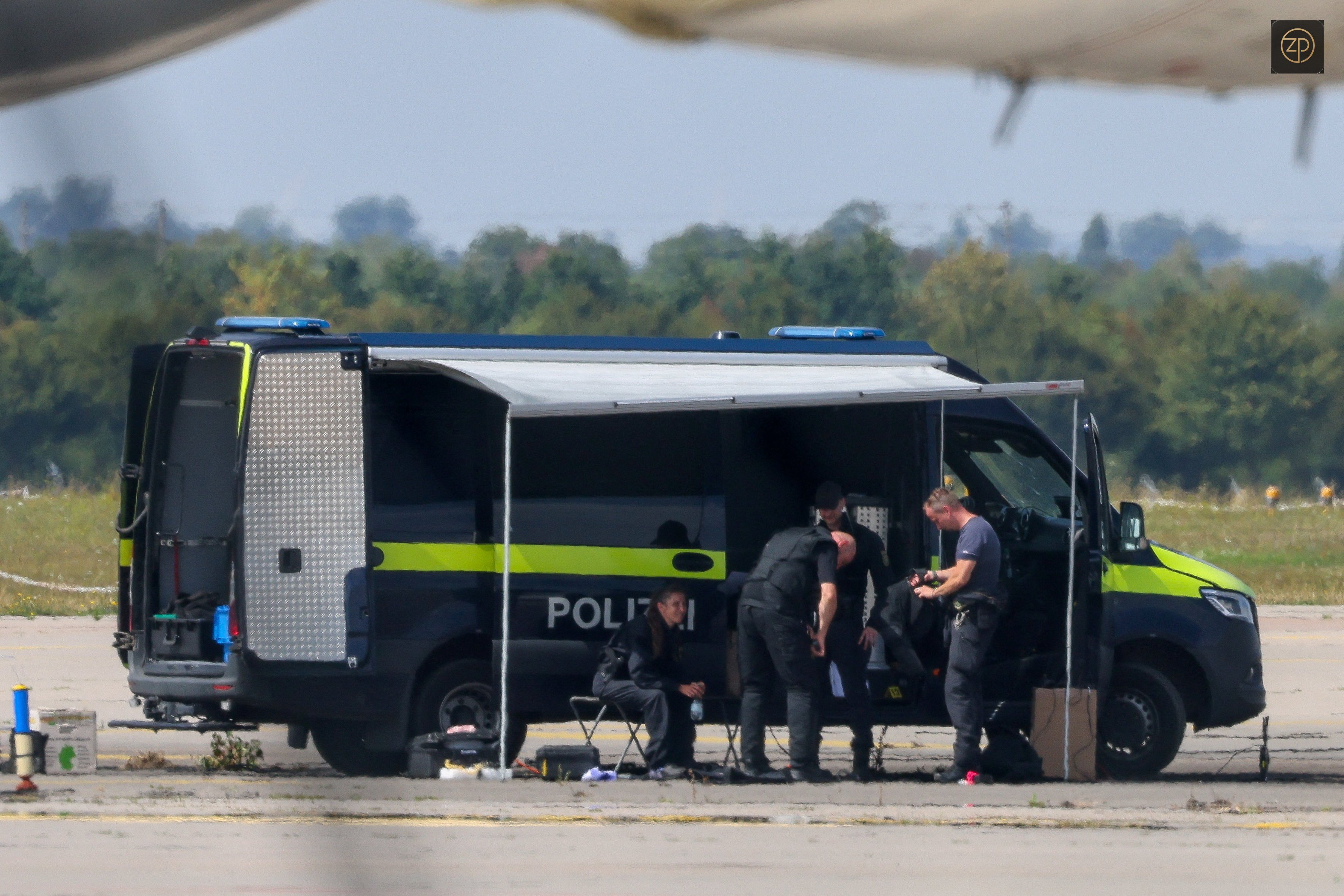
LEIPZIG — An explosive-rigged quadcopter crashed into a Ukrainian cargo plane at a major German logistics hub, exposing severe gaps in Western air defenses and signaling an escalating covert campaign inside NATO territory. The drone slipped undetected through security installations at Leipzig/Halle Airport on Aug. 4, striking the parked aircraft without detonating its plastic explosives payload. The device lay on the tarmac for four hours before a shuttle bus driver spotted it and alerted authorities.
German authorities later connected the wreckage to earlier sabotage attempts. Forensic investigators matched DNA from the quadcopter to an incendiary parcel sent through the same airport’s mail network in July 2024, which ignited inside a freight container, according to reports in the German press. German Interior Minister Alexander Dobrindt acknowledged the high level of sophistication behind the operation without naming Moscow directly. “These threats are not the work of amateurs,” Dobrindt told reporters at the facility, adding that investigators suspect foreign state involvement.
American intelligence agencies assessed that the drone was produced for military use and originated from Russian sources, describing the botched operation as a deliberate trial of NATO’s collective defensive readiness. The incident forms part of a broader pattern troubling security personnel across the continent. Lithuanian Defence Minister Robertas Kaunaus warned that Moscow might be preparing false-flag operations against Baltic energy installations, potentially deploying captured Ukrainian drones to mask its role. Neighboring states, including Poland, have responded by raising alert levels around critical infrastructure.
Military analysts argue the Leipzig incident is part of a coordinated strategy. A report by the International Institute for Strategic Studies revealed that uncrewed aerial vehicles have systematically entered European airspace to map radar coverage, delay civilian aviation, and measure allied reaction times. The study indicated that Moscow frequently utilizes its “shadow fleet” of unregistered oil tankers navigating international waters off the European coastline as mobile launch platforms. These flights have repeatedly breached restricted zones above nuclear facilities and naval bases housing Western submarines.
“The execution from the military standpoint is not bad,” said Nikolay Mitrokhin, a researcher at Germany’s University of Bremen. Mitrokhin suggested that Russia’s GRU military intelligence agency likely directed the operation, noting that European detection and counter-drone systems are severely lagging. “They are outdated by at least five years,” he said, emphasizing how rapidly cheap drone technology has outpaced conventional anti-air doctrine.
Traditional radar networks were engineered to track fast-moving fighter jets and high-altitude missiles, making low-altitude quadcopters difficult to isolate. Scrambling multi-million-dollar fighter aircraft to shoot down inexpensive commercial drones is economically unsustainable and operationally inefficient.

Ukrainian veterans of the current conflict express frustration with Europe’s hesitance. Lieutenant General Ihor Romanenko, a former deputy chief of Ukraine’s air defense staff, highlighted a major breach on Sept. 10, when nearly two dozen suspected Russian drones crossed into Polish airspace. The intrusion forced Warsaw to suspend operations at four commercial airports, yet military forces managed to bring down only two targets.
“It would have been funny had it not been so sad,” Romanenko said, pointing out that Ukrainian forces intercepted hundreds of incoming drones on the exact same day. “Russians carried out all their tasks while NATO was only waking up.”
Andrey Pronin, who trains drone operators in Kyiv, echoed those criticisms, dismissing European diplomatic warnings as toothless. “Europe is not ready for a war,” Pronin said. “They all live with old NATO doctrines that no longer work.”
Moscow continues to reject the allegations, labeling reports of drone incursions over Europe as baseless scare stories. Yet as investigators continue assembling forensic evidence from the Leipzig tarmac, European defense officials face a pressing reality: the mechanics of airspace security have changed, and current defenses remain unprepared.
