





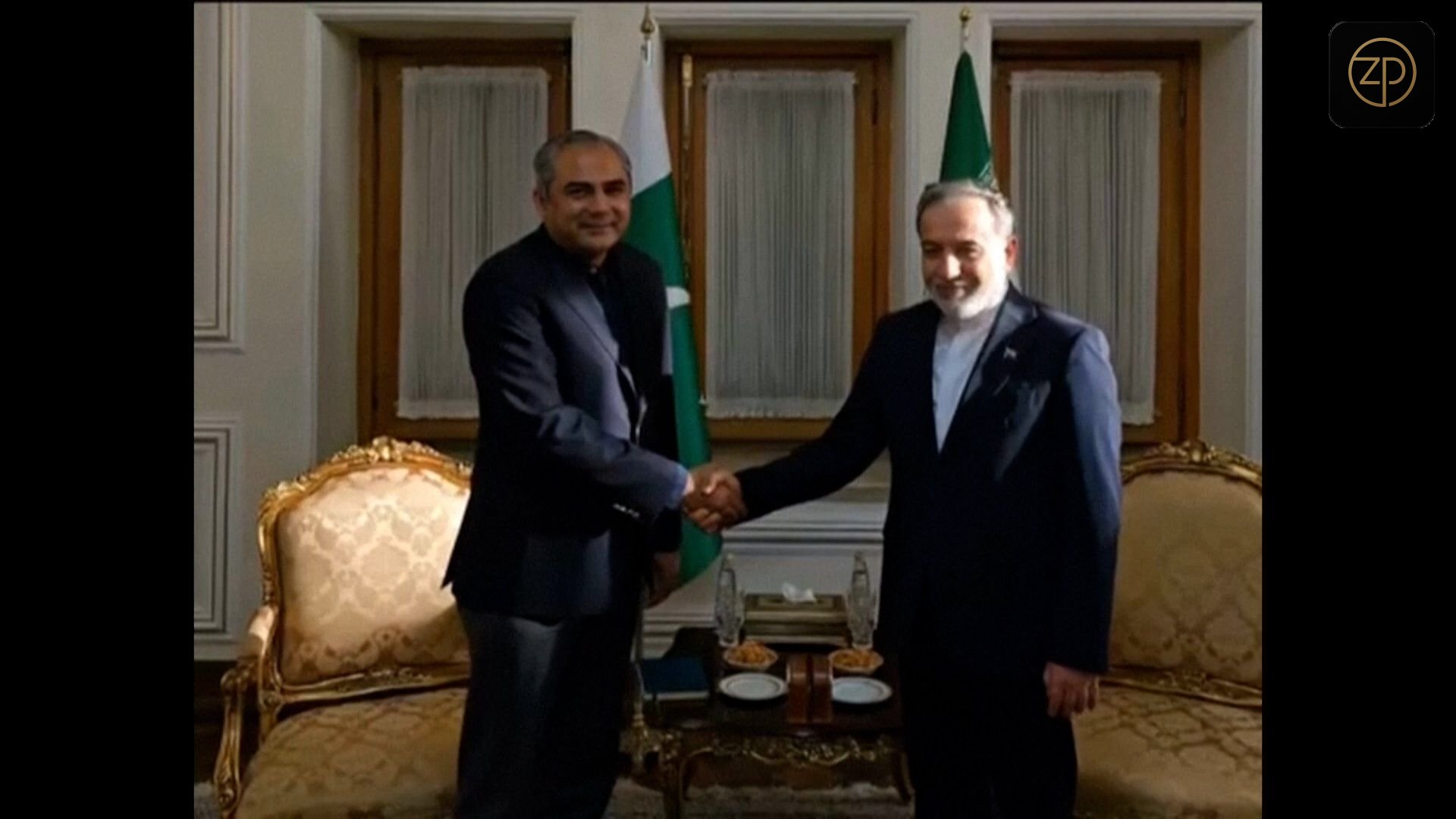

- Pakistan's interior minister met with Iran's foreign minister in Tehran to discuss reopening the Strait of Hormuz amid regional tensions.
- The talks focus on de-escalation and restoring shipping, with human impacts on port workers and fuel prices.
- Pakistan is positioning itself as a mediator, with further diplomatic visits planned.
TEHRAN — In a quiet diplomatic push that could ripple across global energy markets, Pakistan’s interior minister, Mohsin Naqvi, arrived in Tehran on Wednesday for talks with Iranian Foreign Minister Abbas Araghchi. The closed-door meeting centered on efforts to de-escalate the US-Israeli conflict with Iran and restore navigation through the Strait of Hormuz, a narrow waterway that carries roughly one-fifth of the world’s oil.
The strait, which separates Iran from Oman and connects the Persian Gulf to the Gulf of Oman, has been a chokepoint for decades. But for the past several weeks, shipping traffic has slowed dramatically as regional tensions spiked. “Every day the strait stays closed, families in Karachi and Bandar Abbas feel it,” said a Pakistani shipping agent who asked not to be named, speaking by phone from the port city. “We have containers stuck, and people are losing work.”
Naqvi, who also oversees Pakistan’s border security, was accompanied by a small delegation of trade and maritime officials, according to a Pakistani government statement. The visit follows weeks of shuttle diplomacy by Islamabad, which shares a long, porous border with Iran and has traditionally tried to balance its ties with Tehran against its alliances with Gulf states and the West.
For ordinary people, the stakes are not abstract. In the Iranian port of Bandar Abbas, dockworkers have seen shifts cut in half since the strait’s shipping lanes grew hazardous. “My brother used to work double shifts on the docks,” said Maryam Rezaei, a schoolteacher in Tehran whose family lives near the port. “Now he is lucky if he gets two days a week. The whole neighborhood is worried.”
Pakistan, meanwhile, faces its own economic strain. The country imports much of its fuel through the Gulf, and any prolonged disruption could send prices soaring at the pump. “We are not just talking about geopolitics,” Naqvi told reporters after the meeting, according to a pool report. “We are talking about bread and butter issues for millions of people.”
The meeting in Tehran was part of a broader mediation push that has involved Oman, Qatar, and China, according to diplomats familiar with the matter. Araghchi, who has been Iran’s point person on nuclear negotiations, was said to have welcomed Pakistan’s role as a “neighbor and friend.” In a brief statement, Iran’s foreign ministry said the two sides discussed “ways to reduce tensions and ensure the security of maritime routes.”
Neither side disclosed a timeline for reopening the strait, but officials hinted at progress. “We are not there yet, but the conversation is serious,” said a Pakistani official who declined to be named because of the sensitivity of the talks. “We are trying to build trust step by step.”
The crisis began after a series of exchanges between US and Israeli forces and Iranian-backed groups, which escalated into direct strikes on Iranian territory. In response, Iran threatened to close the strait, a move that analysts say would be unprecedented in modern history. The last time the waterway was seriously disrupted was during the Iran-Iraq War in the 1980s, when tankers were attacked by both sides.
For Pakistan, the mediation effort is also about domestic stability. The country has faced its own economic challenges, including a balance-of-payments crisis and political turmoil. Any further spike in energy prices could hit the poorest households hardest. “We are in a difficult neighborhood,” said Ahmed Rashid, a veteran journalist and author who has covered the region for decades. “Pakistan’s interest is in de-escalation, not in picking sides.”

Naqvi’s visit is expected to be followed by a trip by Iran’s oil minister to Islamabad next week, according to sources. The two countries are also exploring a barter arrangement that would allow Pakistan to pay for Iranian oil with wheat and rice, a plan that has been discussed for years but gained new urgency.
For now, the shipping lanes remain tense. Insurance rates for vessels transiting the strait have tripled since the crisis began, and some shipping lines have rerouted around the Arabian Peninsula, adding days to voyages. But the diplomatic channel is open, and both sides seem to want to keep it that way.
“We have to find a way to live with each other,” Naqvi said, in remarks that were broadcast on Pakistani television. “The people of this region deserve peace, not more conflict.”
Whether those words translate into action remains to be seen. But for the dockworkers in Bandar Abbas and the truck drivers in Karachi, the stakes could not be higher.
