





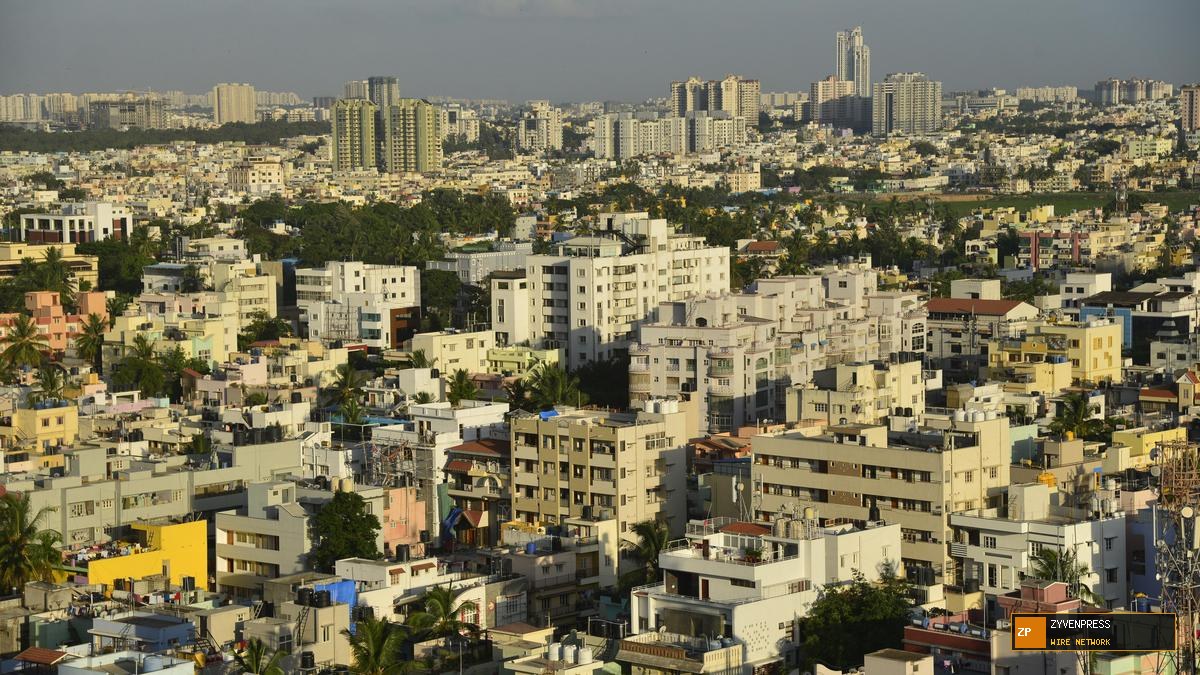

In the last week of the rebate window, the Greater Bengaluru Authority (GBA) recorded a surge of roughly 13,000 new conversion requests, pushing the cumulative total to about 60,000 applications. The data, obtained by The Hindu, suggests a potential revenue stream of ₹402.21 crore if all fees are collected at the reduced 2% rate. However, this figure represents only a fraction of the fiscal expectations set by the city’s planners.
Scale of the response
According to GBA chief commissioner M. Maheshwar Rao, the city has roughly six lakh B‑Khata parcels, meaning that just 10 % of owners have taken the step to regularise their land despite the generous discount. The North City Corporation alone received 17,460 applications, translating to an estimated ₹115 crore in fees at the discounted rate. By contrast, the corporation’s own budget had projected ₹680 crore in revenue from the scheme, highlighting a stark shortfall.
The West City Corporation followed closely with 17,104 applications, worth about ₹99.3 crore, while the Central Corporation logged a modest 591 submissions. Even if every pending application were to be processed at the full 5% charge after August 23, the total intake would still lag behind the original revenue forecasts.
Why owners hesitated
Officials say the primary barrier remains the perceived cost of conversion. When the programme launched, the fee was pegged at 5 % of the guidance value—a figure many residents deemed prohibitive. The subsequent reduction to 2 % was intended to revive interest, but mixed reactions persisted.
“We observed applicants pulling out once they saw the final amount due, especially when neighboring properties had different guidance values,” explained a senior commissioner of the North City Corporation.
Compounding the issue, many homeowners have already constructed dwellings on B‑Khata land. The conversion only regularises the plot itself; it does not legitimise the existing structures, meaning owners would still need to invest heavily to bring the buildings up to code. For many, paying lakhs of rupees merely to formalise the land is not a compelling proposition.
Fiscal repercussions for municipal bodies
The North City Corporation had earmarked ₹680 crore from the conversion fees to fund infrastructure and public services. With the rebate-driven applications yielding just a fraction of that sum, the corporation now faces a budgetary gap that must be filled through alternative channels—whether by raising other taxes, cutting expenditures, or seeking state assistance.
West and Central corporations confront similar dilemmas, albeit on a smaller scale. The disparity between projected and actual collections underscores a broader challenge: aligning revenue-generating policies with the financial realities of property owners.
Government’s next steps
During a recent session, Greater Bengaluru Development Minister Krishna Byre Gowda presented the latest figures, noting that applications had risen from 47,088 on August 14 to the current 60,000. A senior GBA officer hinted that the final tally could approach 75,000 as the deadline draws near.
Once the rebate period expires on August 23, the conversion fee will revert to the original 5 % of the guidance value. Policymakers hope that the temporary discount will have demonstrated the benefits of A‑Khata status, encouraging owners to pay the higher fee later. Critics, however, argue that without addressing the underlying concerns—such as uniform guidance valuations and the cost of regularising existing structures—the scheme will continue to underperform.
Looking ahead
The B‑Khata conversion initiative serves as a litmus test for Bengaluru’s ability to generate non‑tax revenue from land administration. While the rebate succeeded in generating a spike in applications, the overall conversion rate remains modest, and the anticipated fiscal boost is far from realised. Future policy tweaks may need to focus on simplifying valuation methods, offering staggered payment options, or bundling land regularisation with incentives for upgrading existing homes.
For now, municipal corporations must reconcile their budget plans with a reality in which owners are reluctant to shoulder high conversion costs, even when presented with temporary discounts.
The conversion programme was billed as a revenue lifeline for Bengaluru’s municipal bodies, yet the tepid response threatens fiscal stability. Understanding the disconnect between policy incentives and homeowner behaviour is crucial for future urban financing reforms.
Frequently Asked Questions
SCHEMA INDEXED
What is the B‑Khata to A‑Khata conversion?+
It is a legal process that upgrades informal ‘B‑Khata’ land records to the regularised ‘A‑Khata’ status, allowing owners to sell or mortgage the property more easily.
Why did the government cut the conversion fee?+
Initial uptake was low when the charge was set at 5% of the guidance value, prompting a temporary reduction to 2% to stimulate applications before the August 23 deadline.
{“@context”:”https://schema.org”,”@type”:”FAQPage”,”mainEntity”:[{“@type”:”Question”,”name”:”What is the B‑Khata to A‑Khata conversion?”,”acceptedAnswer”:{“@type”:”Answer”,”text”:”It is a legal process that upgrades informal ‘B‑Khata’ land records to the regularised ‘A‑Khata’ status, allowing owners to sell or mortgage the property more easily.”}},{“@type”:”Question”,”name”:”Why did the government cut the conversion fee?”,”acceptedAnswer”:{“@type”:”Answer”,”text”:”Initial uptake was low when the charge was set at 5% of the guidance value, prompting a temporary reduction to 2% to stimulate applications before the August 23 deadline.”}}]}
