







Oil prices extended gains on Tuesday, pushing Brent crude closer to the $90-a-barrel threshold, after US President Donald Trump added a new demand for compensation from Iran, further complicating efforts to reopen the strategic Strait of Hormuz. Gold, meanwhile, touched a two-month high before easing as investors awaited key US inflation data.
Brent crude rose 1.6% to $89.15 a barrel, while US crude climbed to $82.52, the highest levels for both benchmarks since late July. The moves came after Trump told reporters at the White House that Iran should pay for damages incurred by the United States over a 50-year period, a demand that goes beyond Tehran’s conditions for restarting talks.
“We’re going to ask for money for the damage they’ve done over a 50-year period. So if there’s damages to be paid, I think Iran should pay those damages,” Trump said on Monday. He also expressed willingness to let economic pressure take its toll on Iran.
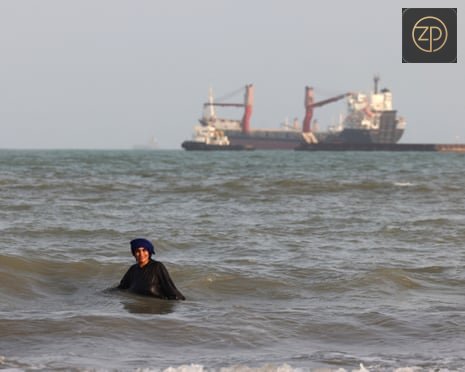
Iran has been negotiating with Oman over new shipping lanes to reopen the strait, which has been effectively closed for months after the US and Israel began military strikes on Tehran on 28 February. A memorandum of understanding signed in June has broken down, with Iran demanding an end to sanctions and military threats before it will resume talks.
“This is going to be almost a war of attrition now,” said Tony Sycamore, a market analyst at IG. “You probably can see the oil market sitting around the $75 to $95 range while we wait to see who blinks first.”
Spot gold rose to $4,434.84 an ounce earlier in the session, its highest level since 5 June, before easing 0.3% to $4,377. Investors are awaiting Wednesday’s US inflation data for clues on the Federal Reserve’s interest rate path, after weak jobs data last week prompted traders to scale back bets on a rate hike next month.
Analysts remain split on central bank moves. “We still retain the view that the Fed or the Bank of England will not hike rates, though the European Central Bank may be tempted to deliver another hike at the September meeting,” one market strategist said. “Tomorrow’s inflation data would be key for setting the tone of markets for the coming weeks.”
European stock markets opened flat to slightly higher. The UK’s FTSE 100 traded 3 points higher at 10,865, while the German Dax, French CAC, Italian FTSE MIB, and Spanish Ibex all edged up 0.2%.
InterContinental Hotels Group reported slower revenue growth, as a sharp decline in the Middle East offset gains in the US and China. The company, which owns Holiday Inn, Crowne Plaza, and Hotel Indigo, reported global revenue per available room (RevPAR) growth of 3.5% in the three months to June, down from 4.4% in the first quarter. Its shares fell 2.7% in early trading.
The Middle East, which accounts for about 5% of global revenue, recorded a 19% drop in RevPAR in the second quarter. RevPAR rose 5.4% in the Americas and 0.8% in China. IHG said it was on track to meet market expectations for annual revenue and earnings.
“While there are ongoing impacts from the Middle East conflict, including some wider disruption to international travel flows, we continue to expect these to be fully offset by growth in demand elsewhere,” said CEO Elie Maalouf. The FIFA World Cup, held across the US, Canada, and Mexico, added about 1.0 percentage point to Americas RevPAR growth in Q2, with a smaller benefit expected in Q3.
US-listed rivals Hilton and Marriott also reported weaker Middle East revenue last month, though US demand remained strong.

Consumer confidence reached its highest level in almost two years in July, according to a Barclays survey. Some 30% of those surveyed felt confident about the strength of the UK economy, a 21-month high and a six-percentage-point improvement on June. Consumer card spending grew 2% year on year, up from 1.9% in June, helped by the World Cup and more people holidaying in the UK.
Nvidia has partnered with six major Wall Street financial institutions to raise more than $500bn for artificial intelligence infrastructure. The company has the option to backstop up to $125bn, or 25% of the potential deals, CEO Jensen Huang said on X.
The move highlights surging demand for AI computing capacity, drawing institutional investors as governments and companies race to build datacentres. Big tech firms have signalled spending on AI would not slow, with combined outlays set to surpass $730bn this year. Nvidia signed memorandums of understanding with Apollo, BlackRock, Blackstone, Brookfield, Goldman Sachs, and KKR.
“These financing platforms will help customers access scarce compute at scale and build the AI factories that will power every industry and country in the age of AI,” Huang said. KKR’s co-CEOs Joe Bae and Scott Nuttall added: “Compute has become a critical infrastructure asset.”
Asian shares were mixed. Japan’s Nikkei rose more than 2% and South Korea’s Kospi gained nearly 1%, while Chinese markets fell. The CSI 300 dropped 0.6% and Hong Kong’s Hang Seng lost nearly 1%.
The Reserve Bank of Australia kept its cash rate unchanged at 4.35% for a second meeting, saying the economy was slowing as expected but warning it may raise rates again if needed to control inflation.
