





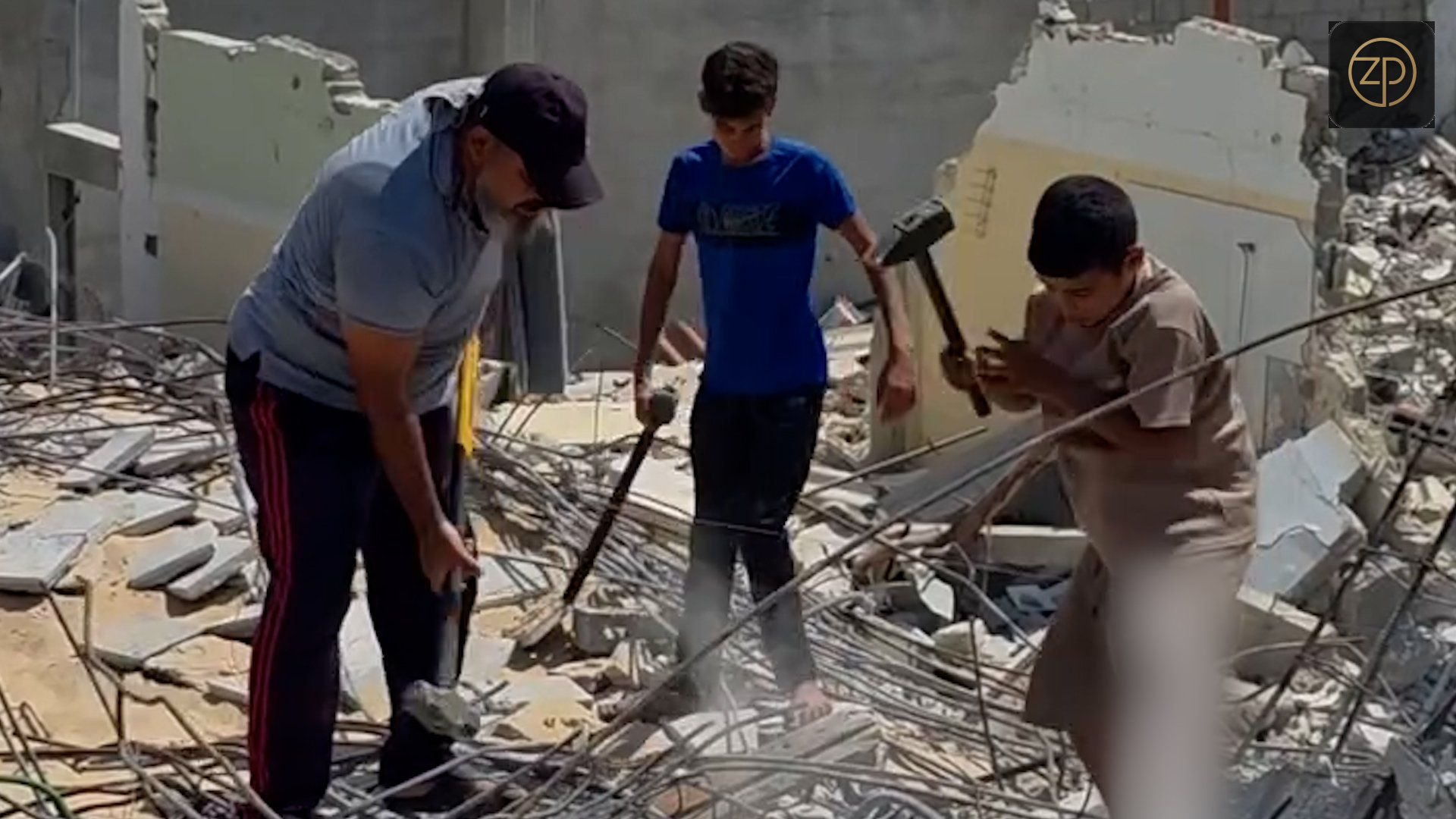

- A Gaza father and sons are manually clearing their destroyed home due to Israel's blocking of heavy machinery, which civil defense teams say is slowing body recovery and reconstruction.
- The equipment ban has severe economic consequences, including stalled construction, soaring unemployment, and increased costs, deepening Gaza's financial crisis.
- Experts warn that without heavy machinery, any sustainable economic recovery remains distant, as families and contractors struggle with the burden of manual labor.
The rubble of what was once a family home in Gaza is being moved one bucket at a time. A father and his two sons, armed with shovels and bare hands, are picking through the debris of their destroyed residence, a painstaking process that highlights the broader economic paralysis gripping the enclave.
Civil defense teams on the ground say the absence of heavy machinery—bulldozers, cranes, and excavators—has turned what should be a swift clearance operation into a weeks-long ordeal. Israel’s continued restrictions on the entry of such equipment, they argue, are not only delaying the recovery of bodies still buried beneath collapsed structures but also stalling any potential for economic revival.
The financial implications are stark. In a normal reconstruction scenario, heavy equipment can clear a collapsed building in days. Here, manual labor stretches the timeline to months, inflating costs and draining the resources of families already pushed to the brink. Each day of delay means lost wages, disrupted livelihoods, and a deepening dependency on aid.
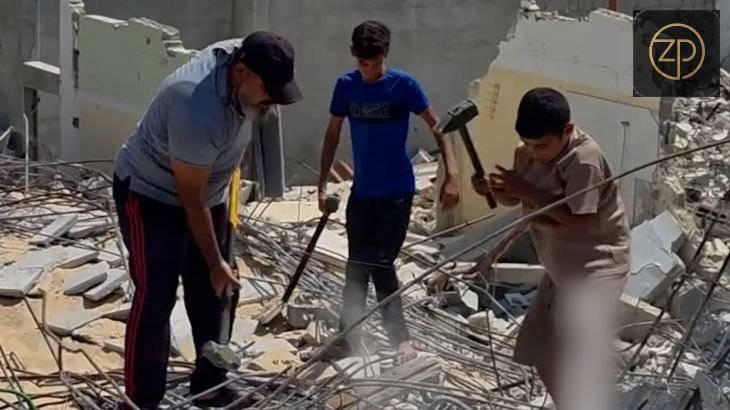
“We are going back to the stone age,” said a civil defense official, who spoke on condition of anonymity because he was not authorized to brief the press. “Every building we clear by hand is a building we cannot help rebuild. The economy is not just stalled; it is moving backward.”
The father, who asked to be identified only as Abu Mohammed to protect his family, described the emotional and financial toll. “We lost everything, and now we are spending what little we have on tools and food while we dig. There is no work, no income, and no end in sight,” he said, pausing to wipe dust from his face.
The blockade on heavy machinery is part of a wider pattern of restrictions that have crippled Gaza’s economy long before the current conflict. According to the World Bank, Gaza’s GDP contracted by more than 10 percent in the last quarter alone, with unemployment hovering near 70 percent. The manual clearance of rubble, while necessary, is a symbol of the broader de-development that economists have long warned about.
“The inability to bring in basic construction equipment is not just a humanitarian issue; it is an economic catastrophe,” said Rami Al-Masri, a Ramallah-based economist. “Every day that passes without heavy machinery, the cost of reconstruction rises, and the chance of any sustainable recovery diminishes.”
The financial burden is not borne solely by families. Local contractors, who would typically bid on clearance and rebuilding contracts, are idle. The few that operate do so at a loss, unable to import the parts or fuel needed to keep their aging machines running. The result is a paralyzed construction sector, once a key employer in the strip.
The psychological and economic scars are likely to linger. Children who should be in school are instead hauling debris. Parents who once worked as masons or electricians now scavenge for scrap metal to sell. The informal economy, once a lifeline, is now the only game in town, but it operates at a fraction of its former capacity.

International donors have pledged billions for reconstruction, but much of that money remains frozen, contingent on political agreements that seem distant. Meanwhile, the manual labor continues, a daily reminder of the gap between promises and reality.
“We are not asking for charity,” Abu Mohammed said, his voice cracking. “We are asking for the tools to rebuild our own lives. Without them, we are just digging our own graves, one shovelful at a time.”
As the sun sets over the rubble, the family’s work for the day ends. Tomorrow, they will start again, their hands blistered, their hopes dimmed, but their resolve—like the economy they are trying to revive—still flickering, however faintly.
